
Spilt Milk Comics logo Spilt Milk Comics
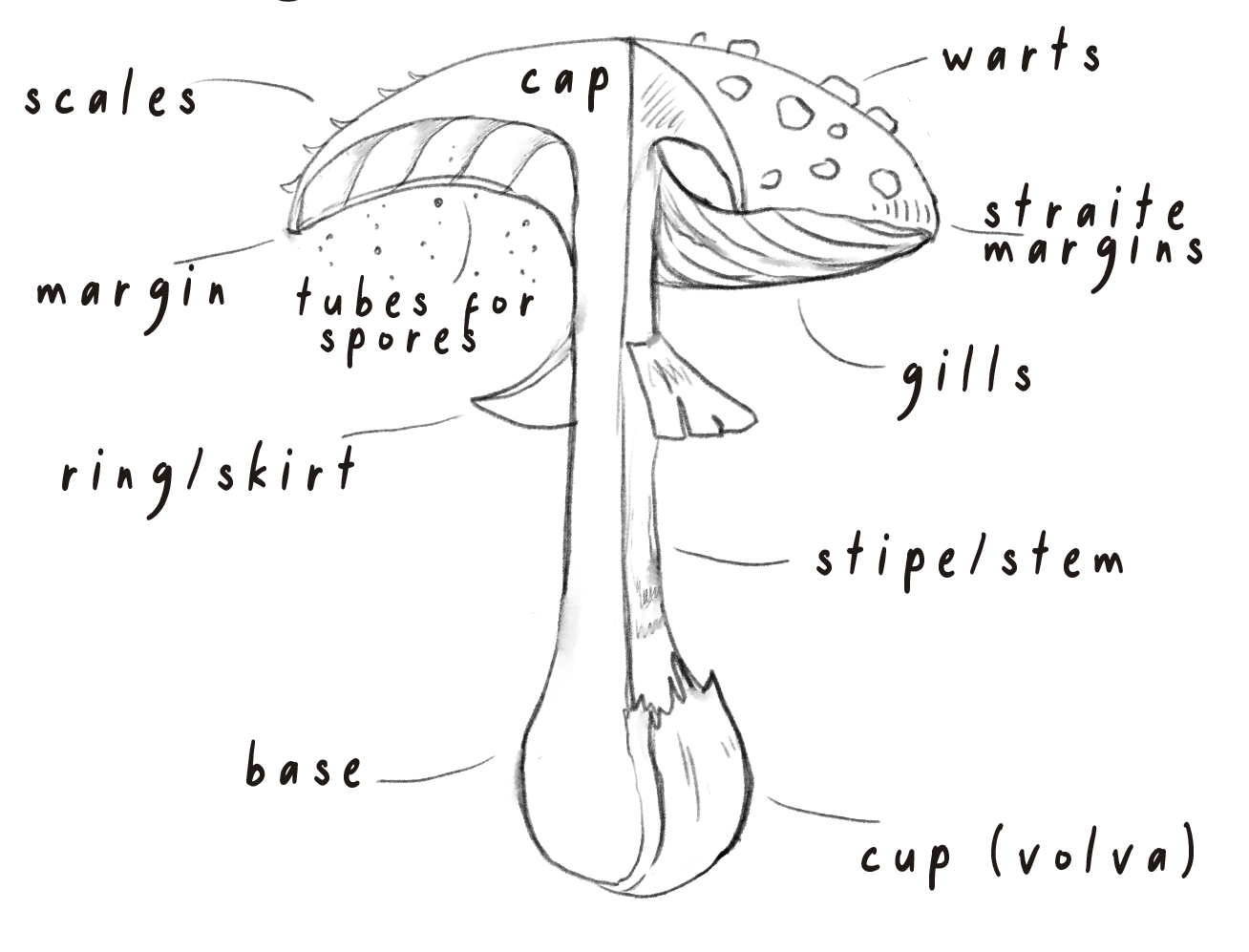
Mushroom pocket guide artwork

Mushrooms in the Woods at Hogsback

Pocket Guide

Created by SpiltMilk-Comics
for the Hogsback Mushroom Festival

Visit Festival Site
Mushroom pocket guide artwork mirrored

Mushroom Key

Quick visual guide to symbols and warning levels

Mushroom key diagram
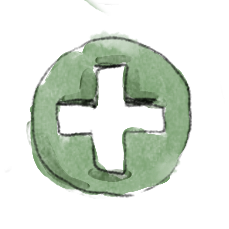
Deadly icon
Deadly / Toxic Do not consume. Serious poisoning risk.

Very Deadly = 2 skulls

Edible icon
Edible Safe only with correct identification and handling.
Medicinal icon
Medicinal Use Traditional/scientific interest for therapeutic compounds.
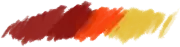
Fly Agaric color palette

Colour range this mushroom may show depending on age and growth stage.

Fly Agaric

Amanita muscaria
Colour palette for Amanita muscaria
Medicinal iconMedicinal
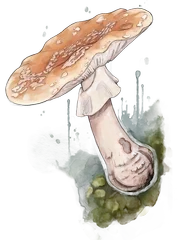
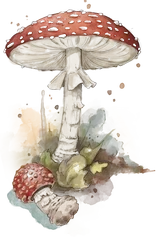
Fly Agaric illustration

It has been used for thousands of years by Siberian shamans for its psychoactive properties. Mushrooms were picked and hung to dry on the tips of pine tree branches in the forest. A possible source of the tradition of red decorations on Christmas trees. This mushroom is deeply embedded in human folklore and culture. Multiple fascinating books are dedicated to the history and understanding of this fungus.
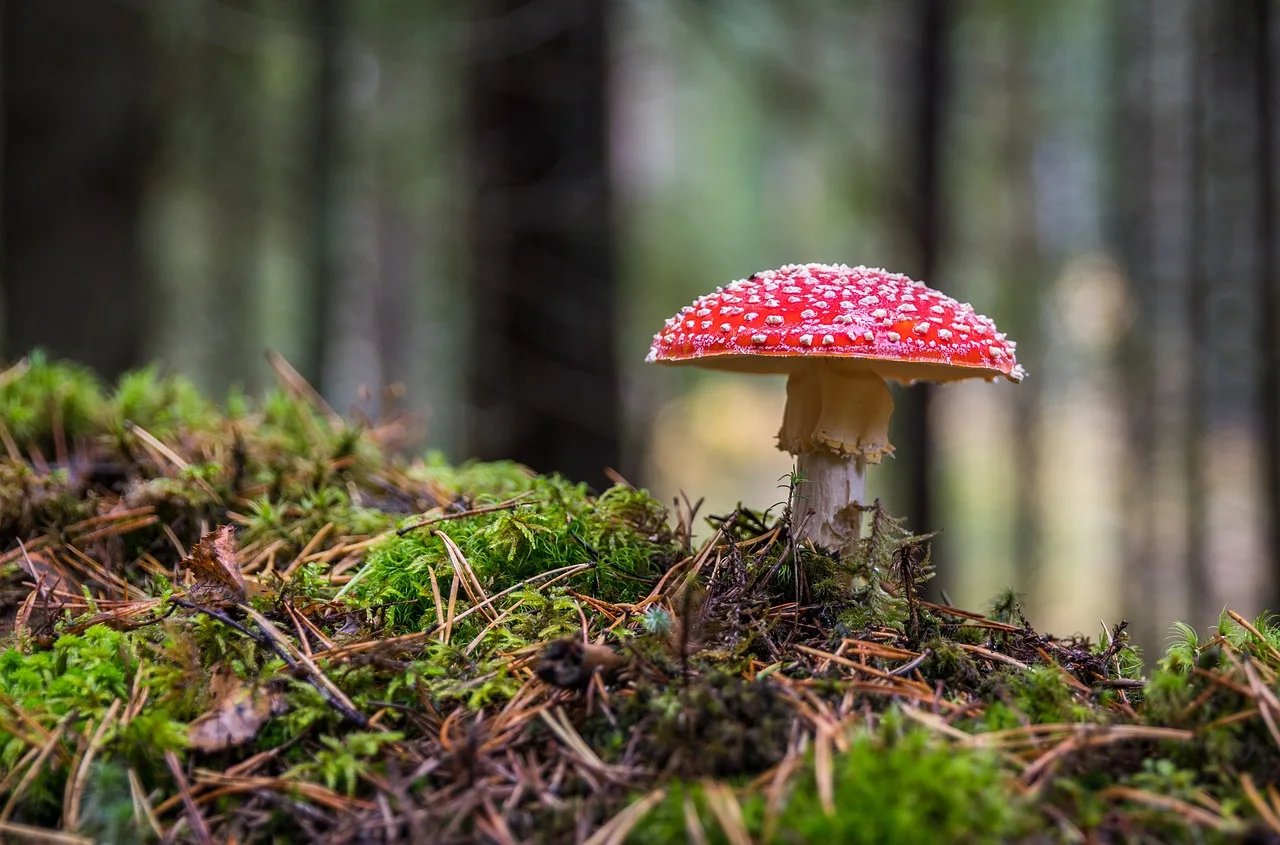
Fly Agaric real sample

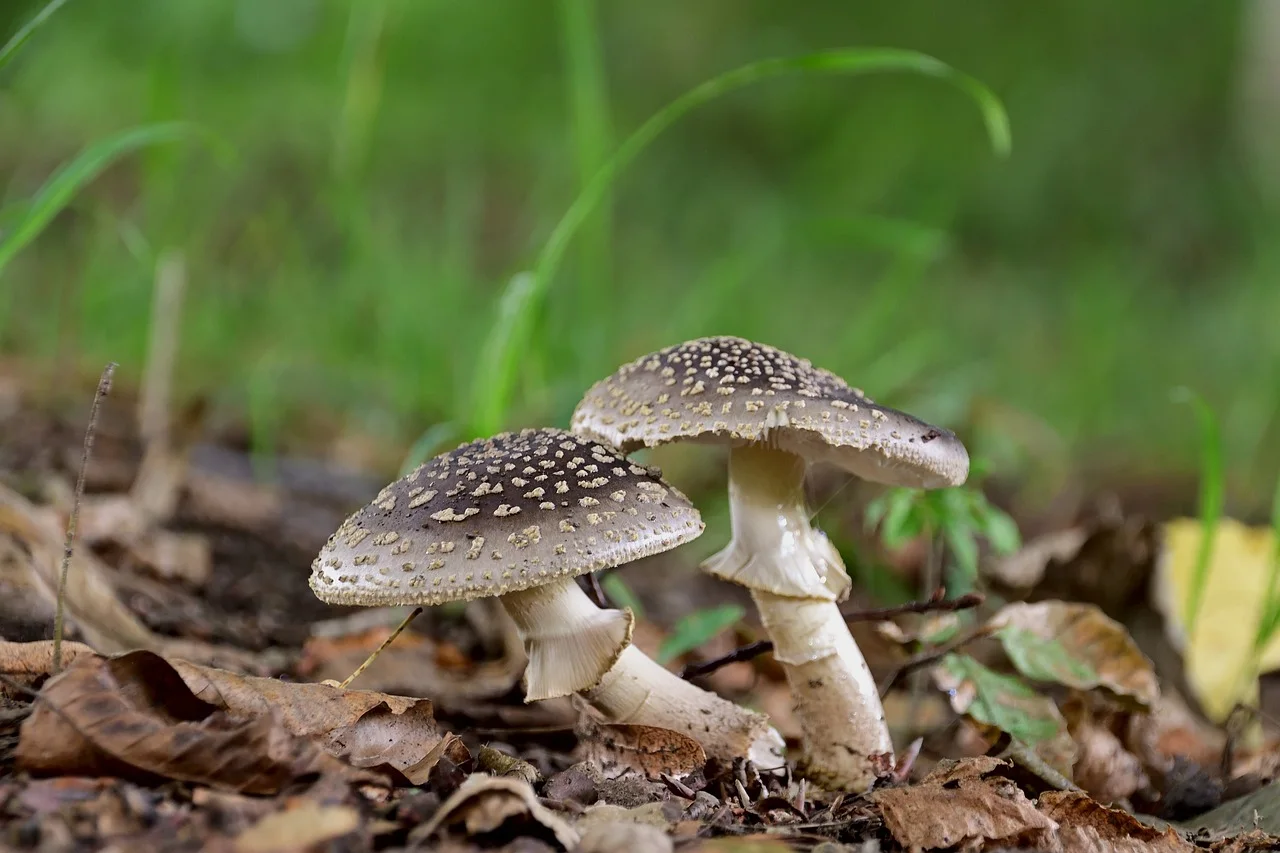
Panther Cap

Amanita pantherina

Colour palette for Amanita pantherina
Deadly iconDeadly
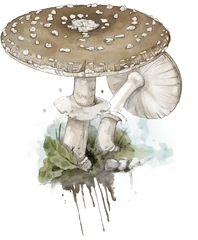
Panther Cap illustration

The colour is said to resemble a panther's coat with white spotting. Considered deadly poisonous due to its high concentration of ibotenic acid and muscimol (nervous-system toxins). Research on these active ingredients as potential medication for nerve pain is underway.

Panther Cap real sample

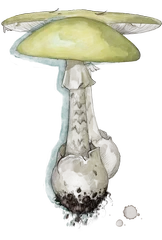
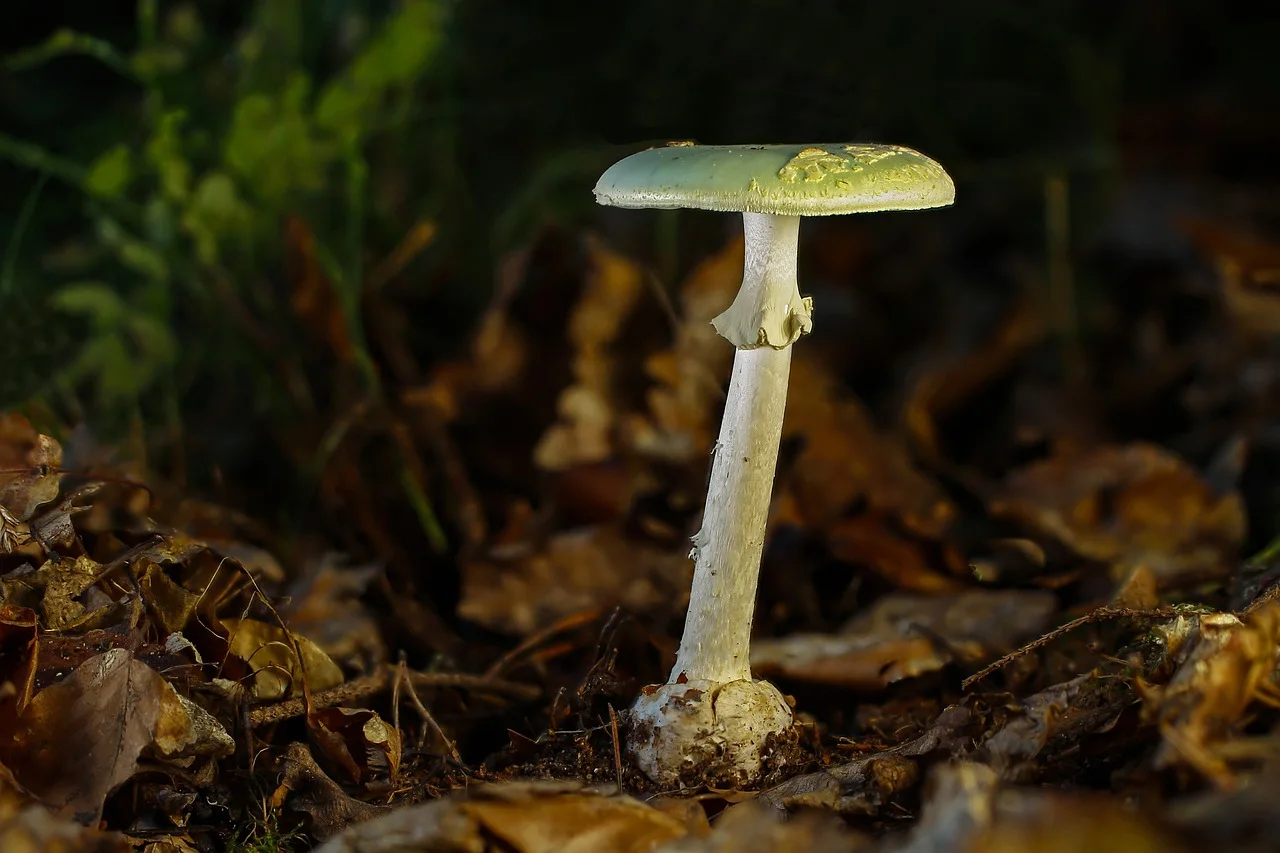
Death Cap

Amanita phalloides

Colour palette for Amanita phalloides
Deadly iconDeadly iconVery Deadly
Death Cap illustration

Olive green with a silky smooth cap. This nondescript mushroom is one of the most poisonous fungi known to man. Consuming just half a mushroom can be fatal. It is responsible for most global deaths by accidental poisoning due to confusion with other edible-looking brown mushrooms.

Death Cap real sample

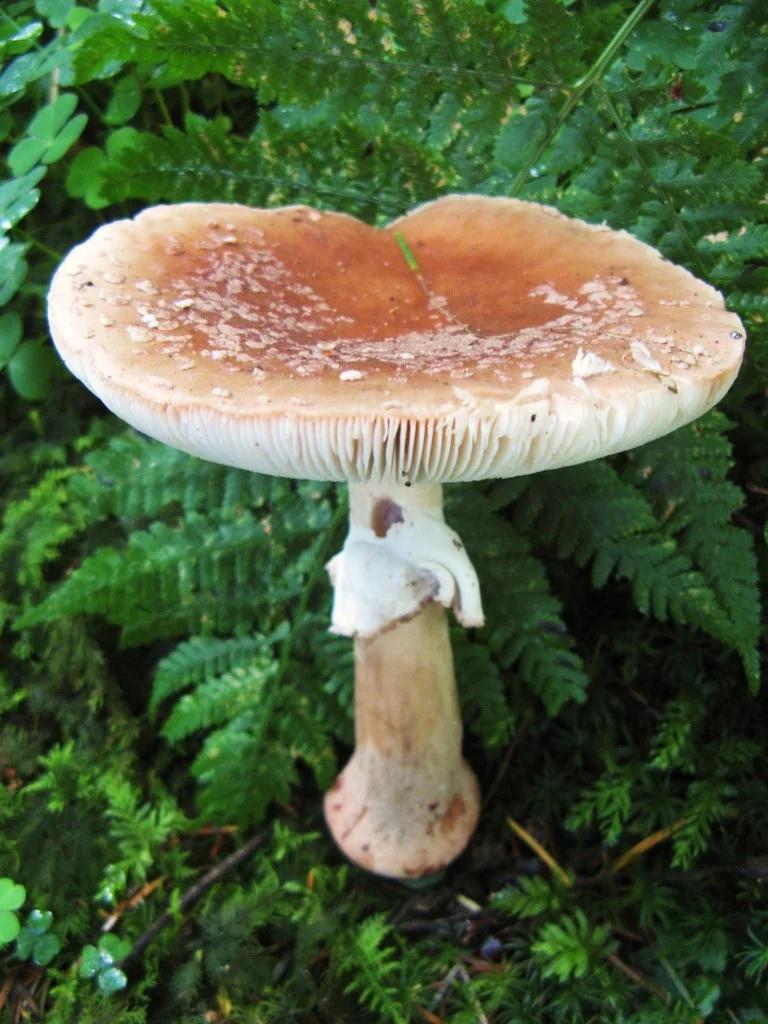
Blusher

Amanita rubescens

Colour palette for Amanita rubescens
Edible iconEdible
Blusher illustration

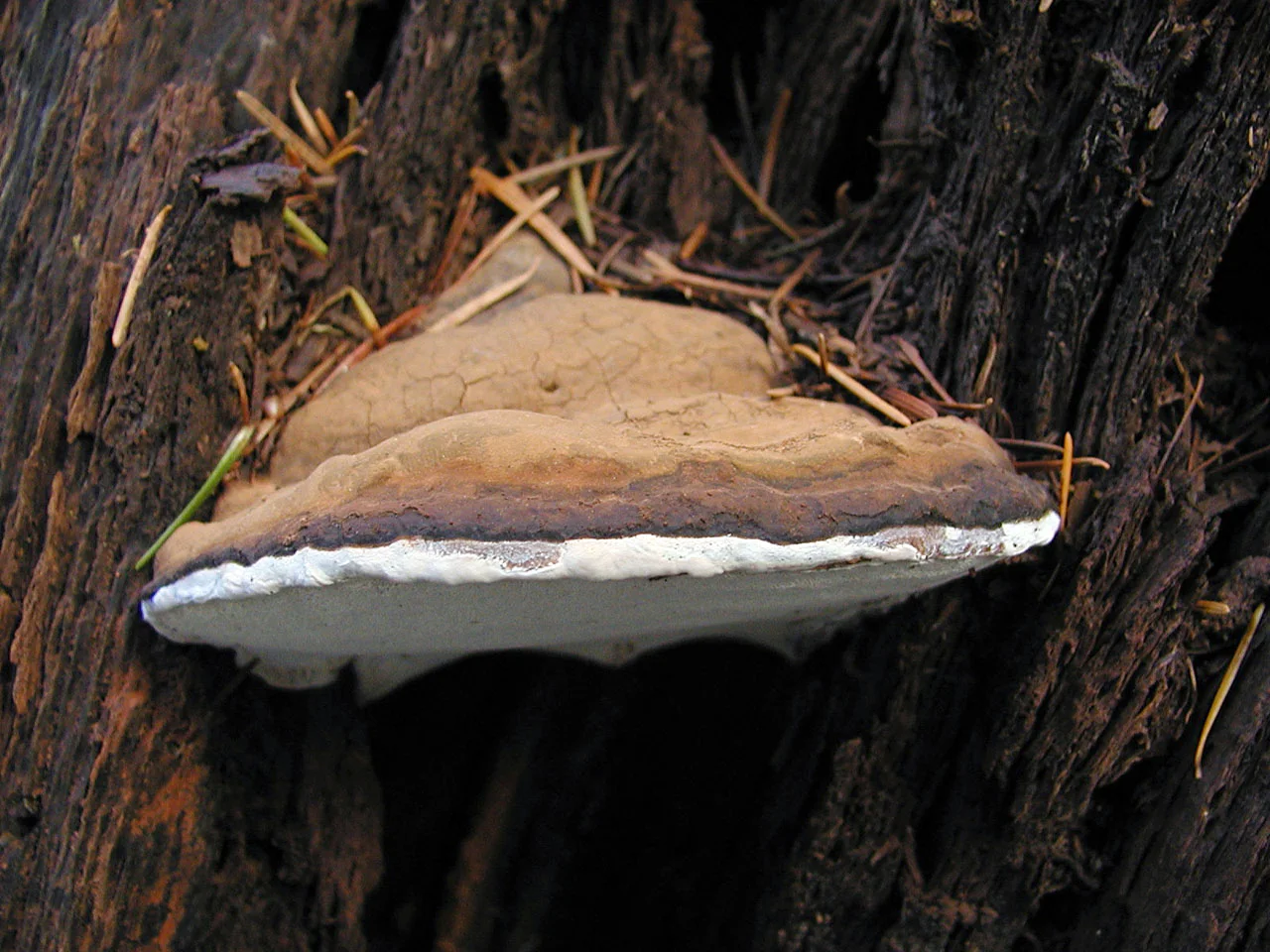
A mushroom with a lot of variability in appearance and colour tone. Highly prized when cooked and very tasty. A toxic protein in this mushroom is destroyed during cooking. The blusher is often confused with the panther cap, so inexperienced foragers should be cautious.
Blusher real sample

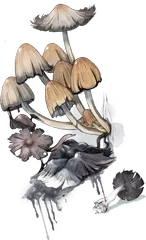
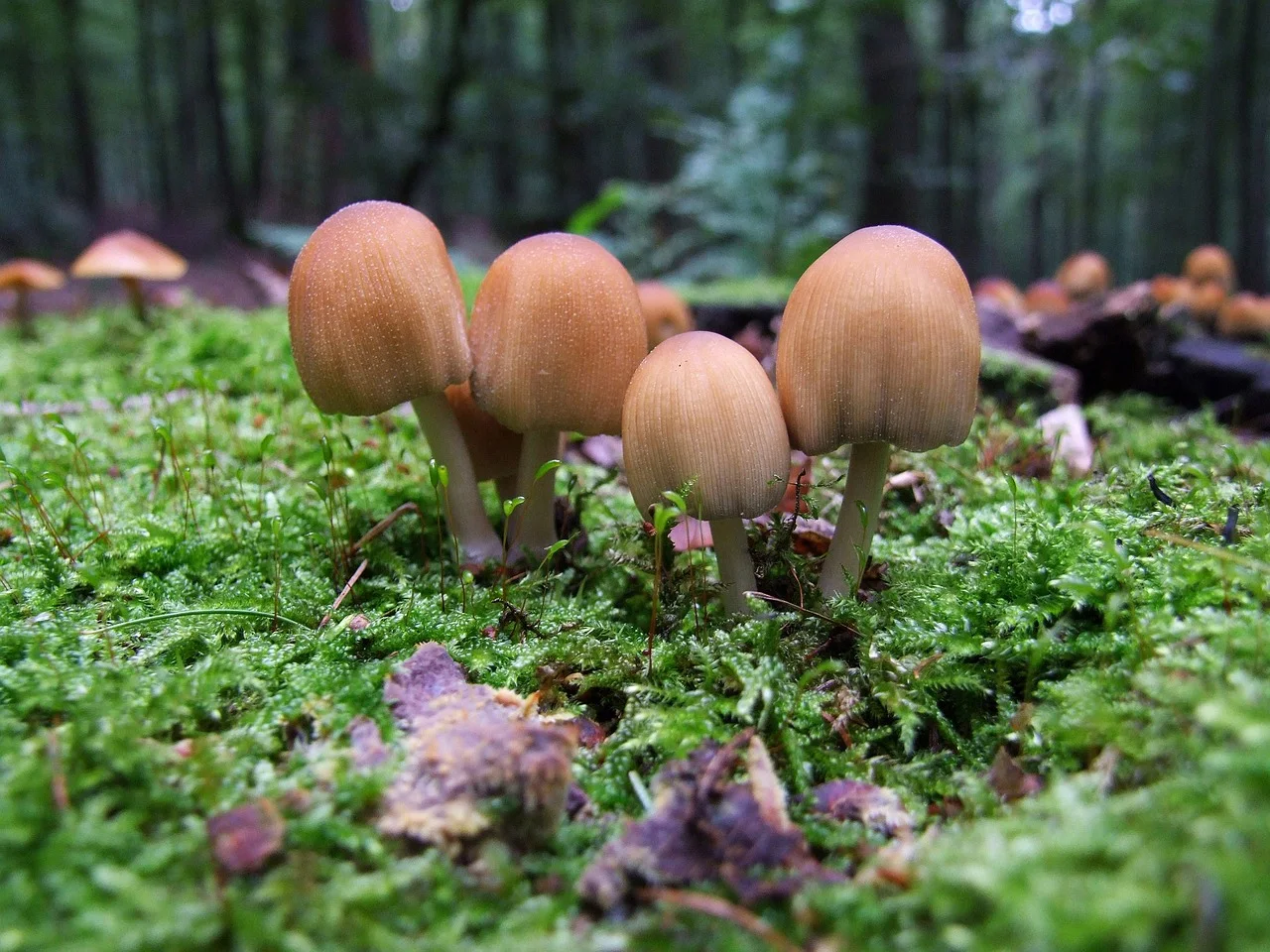
Mica Cap

Coprinellus micaceus

Colour palette for Coprinellus micaceus
Edible iconEdible
Mica Cap illustration

Displays the biological process called deliquescence, where the gills degrade into dark black spore goo. Cooking must happen quickly after harvesting. This mushroom can bioaccumulate heavy metals and should not be eaten when growing near roadsides or polluted ground.

Mica Cap real sample

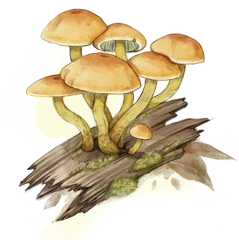
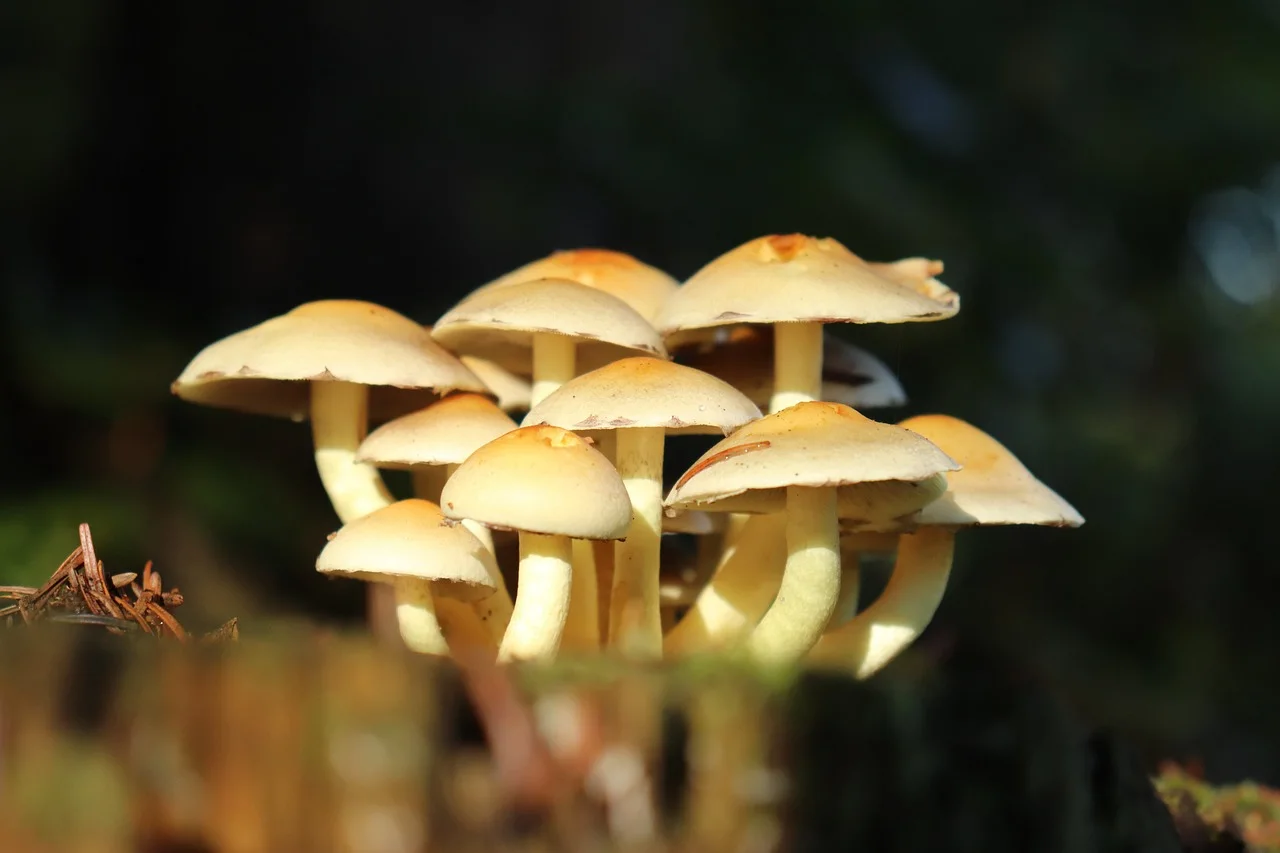
Sulphur Tuft

Hypholoma fasciculare

Colour palette for Hypholoma fasciculare
Deadly iconDeadly
Sulphur Tuft illustration

Exhibits a fascinating phenomenon: the mushrooms fluoresce under ultraviolet light. An inedible poisonous mushroom that grows in abundance on dead wood. Poisonings are rarely fatal but can cause severe gastrointestinal and neurological symptoms hours after ingestion.

Sulphur Tuft real sample

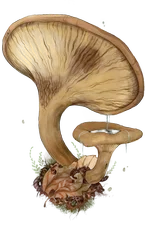
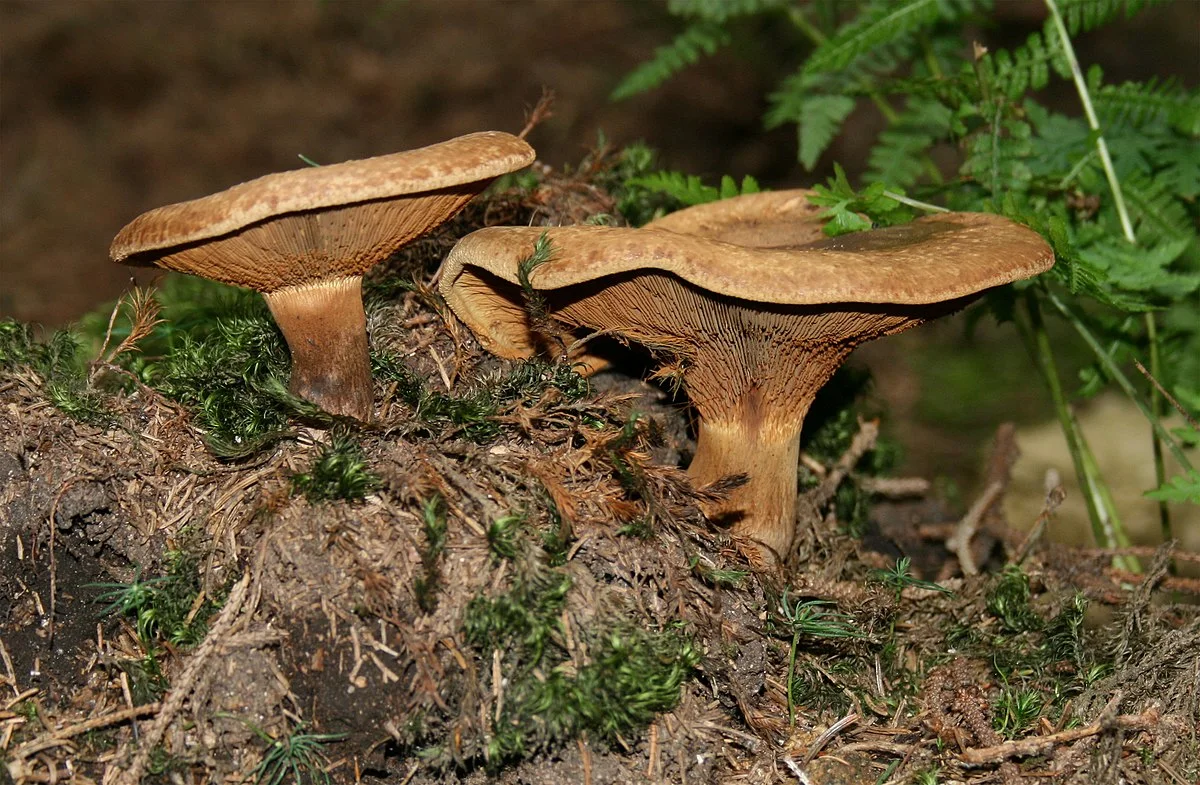
Brown Roll-Rim

Paxillus involutus

Colour palette for Paxillus involutus
Deadly iconDeadly
Brown Roll-Rim illustration

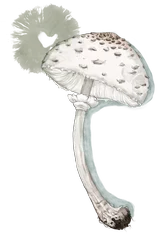
Easily confused with edible species like saffron milk cap. Once considered edible in parts of Europe, it is now considered deadly poisonous. It can trigger destructive immune reactions against red blood cells. Despite this, it is still consumed in some regions.

Brown Roll-Rim real sample

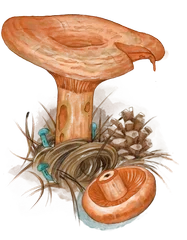
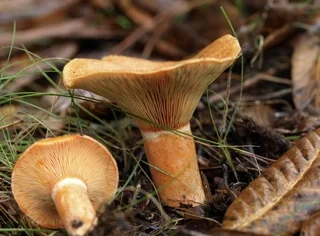
Pine Ring

Lactarius deliciosus

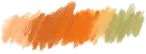
Colour palette for Lactarius deliciosus
Edible iconEdible
Pine Ring illustration

A delicious mushroom once native to Europe, now common in Hogsback. Introduced alongside exotic trees and root soil. The stem has a unique bright orange or saffron colour when freshly picked.

Pine Ring real sample

Russula Group

Russula sp.

Colour palette for Russula sp.
Deadly iconDeadly
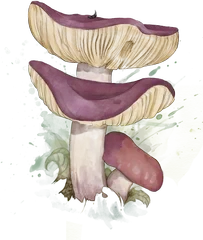
Russula illustration

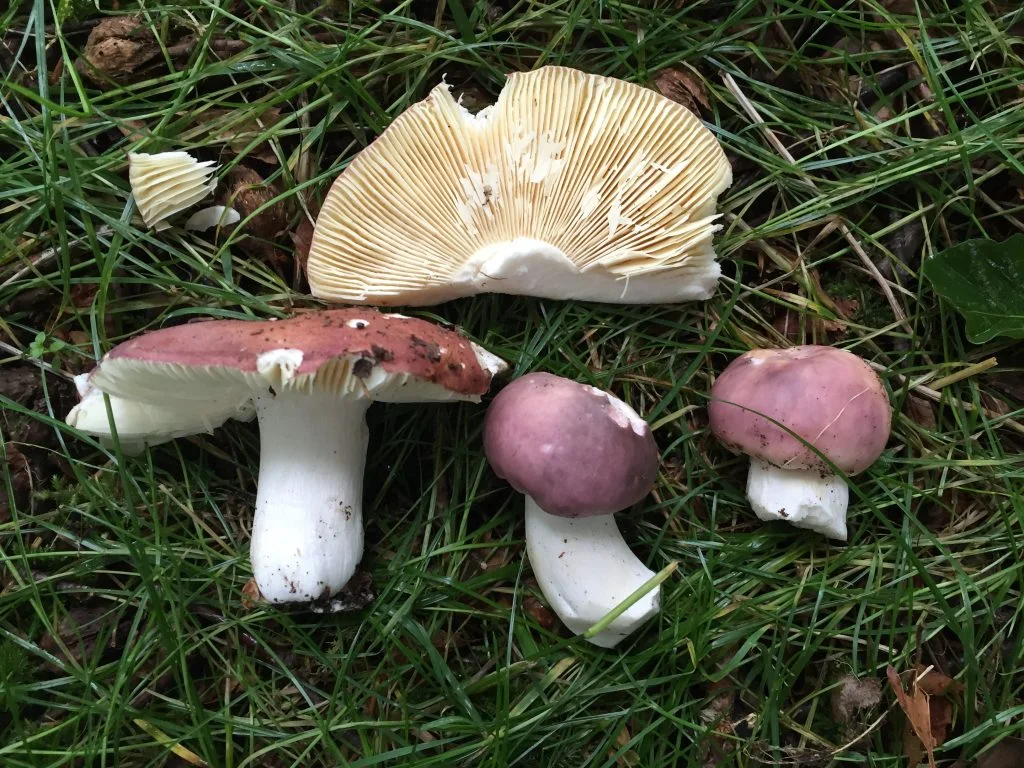
A few similar-looking Russula species occur in Hogsback and are difficult to distinguish. Colours range from wine-red to dark purple and can fade with rain. The genus is highly diverse worldwide and includes toxic, unknown, and edible species.

Russula real sample

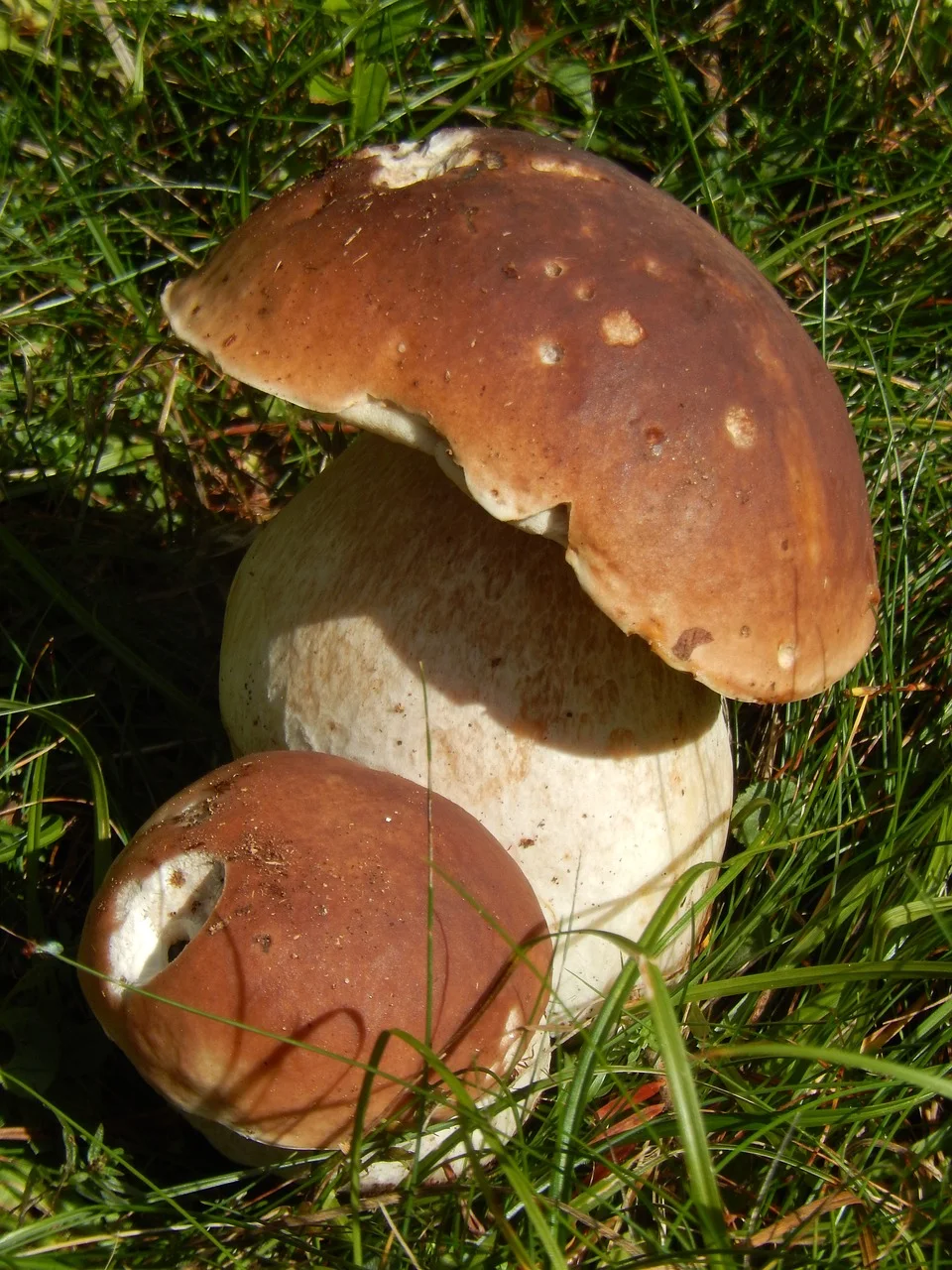
Boletus sp.

Porcini / Bolete Group

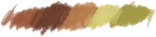
Colour palette for Porcini / Bolete Group
Edible iconEdible
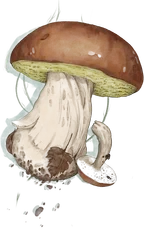
Boletus illustration

Several edible boletes are found in Hogsback and are among the best known wild gourmet mushrooms. Easy to identify because they have pores instead of gills. A great group for novice foragers to study carefully. In Southern Africa, only the bushveld bolete is notably poisonous.

Boletus real sample

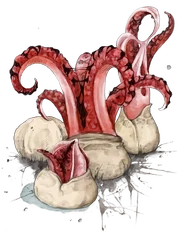
Stink Horn

Clathrus archeri

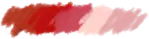
Colour palette for Clathrus archeri
Deadly iconDeadly
Stink Horn illustration

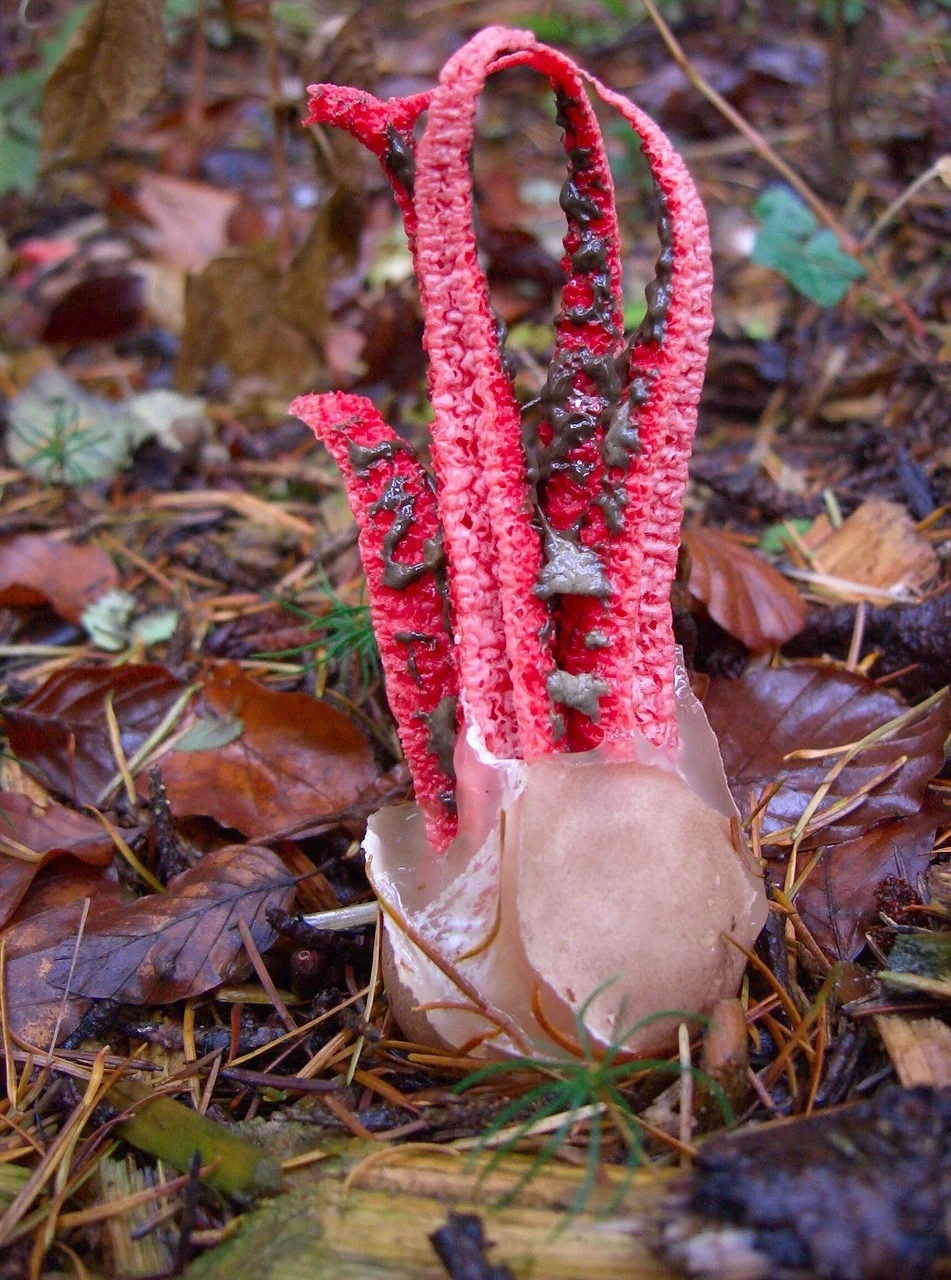
Also known as Devil's Fingers. Creepy red tentacles emerge from a gelatinous egg on the forest floor. It emits a rotting-flesh scent to attract flies for spore dispersal. The immature egg is sometimes described as edible but generally unpleasant.

Stink Horn real sample

Chicken Of the Woods

Laetiporus sulphureus

Colour palette for Laetiporus sulphureus
Edible iconEdible
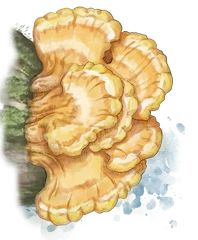
Chicken of the Woods illustration

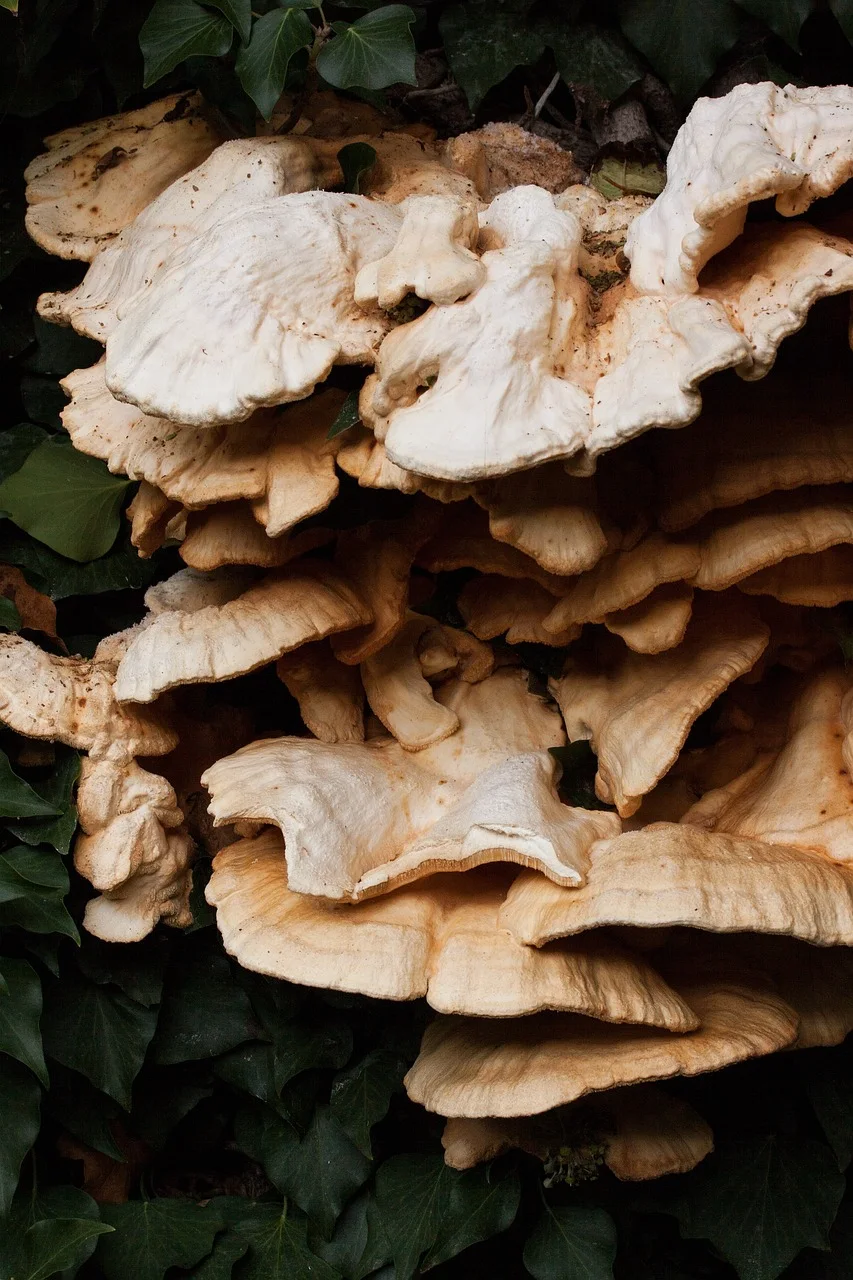
A large delicious mushroom with a texture and taste often compared to chicken. Younger fruit bodies are generally preferred. A gourmet delicacy in many regions and studied for strong antibacterial properties. Considered a pathogen on living trees, causing heart-rot.

Chicken of the Woods real sample

Artists Palette

Ganoderma applanatum

Colour palette for Ganoderma applanatum
Medicinal iconMedicinal
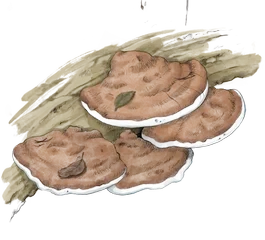
Artists Palette illustration

Has a white underside that can be etched or drawn on with a sharp object and preserved when dried. Also called artist's conk. A revered medicinal mushroom with long historical use and active research around anti-tumour and antimicrobial potential.

Artists Palette real sample

White Parasol & False Parasol

Macrolepiota sp. / Chlorophyllum molybdites

Colour palette for Macrolepiota sp. / Chlorophyllum molybditesColour palette for Macrolepiota sp. / Chlorophyllum molybdites
Edible iconEdibleDeadly iconDeadly
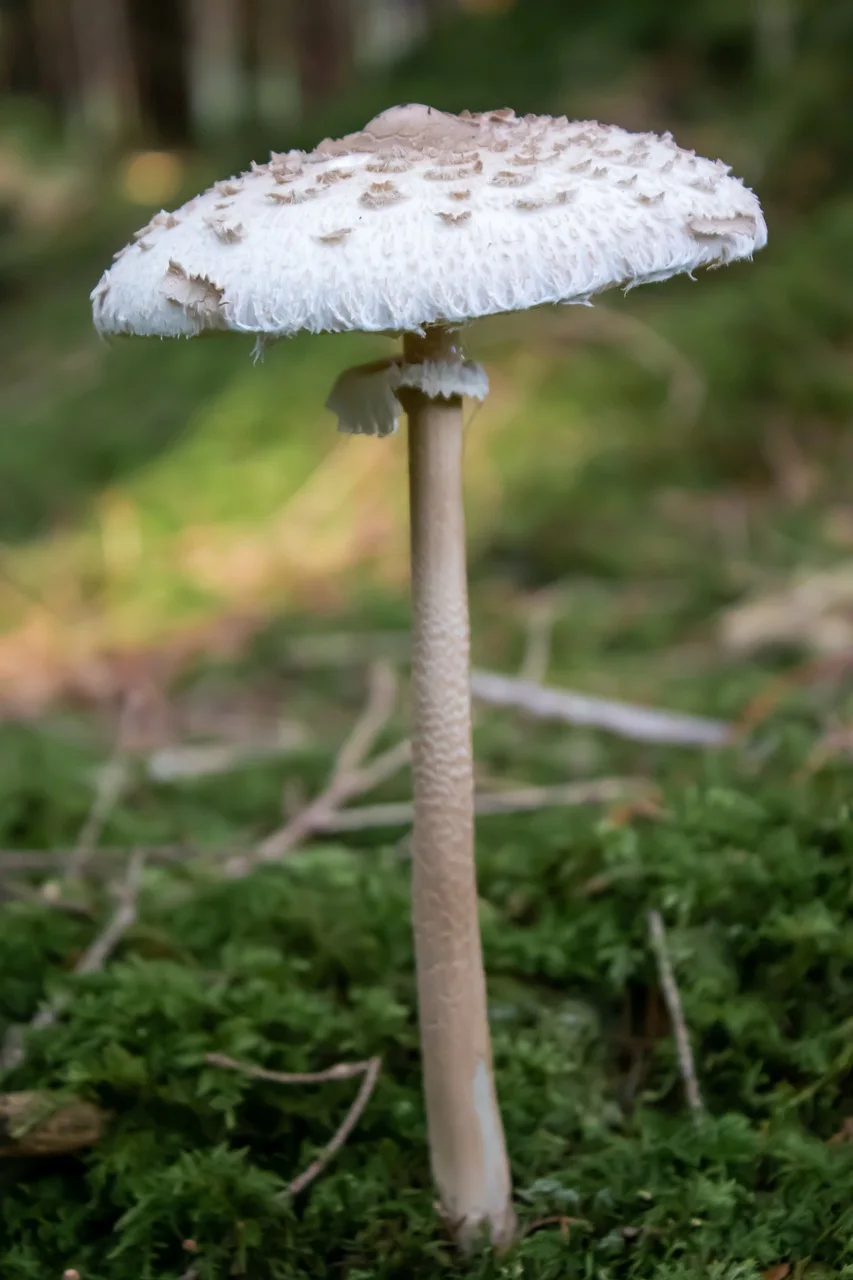
White Parasol illustration

Both can have large white umbrella-shaped caps. White parasol (Macrolepiota) is considered edible, while false parasol (Chlorophyllum molybdites) is inedible and can look very similar. Gills with a green hue indicate false parasol, and novices should avoid this pair.

White and false parasol real sample

Blood Red Bracket

Pycnoporus sp.

Colour palette for Pycnoporus sp.
Deadly iconDeadly
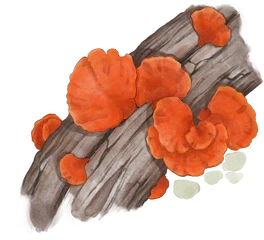
Blood Red Bracket illustration

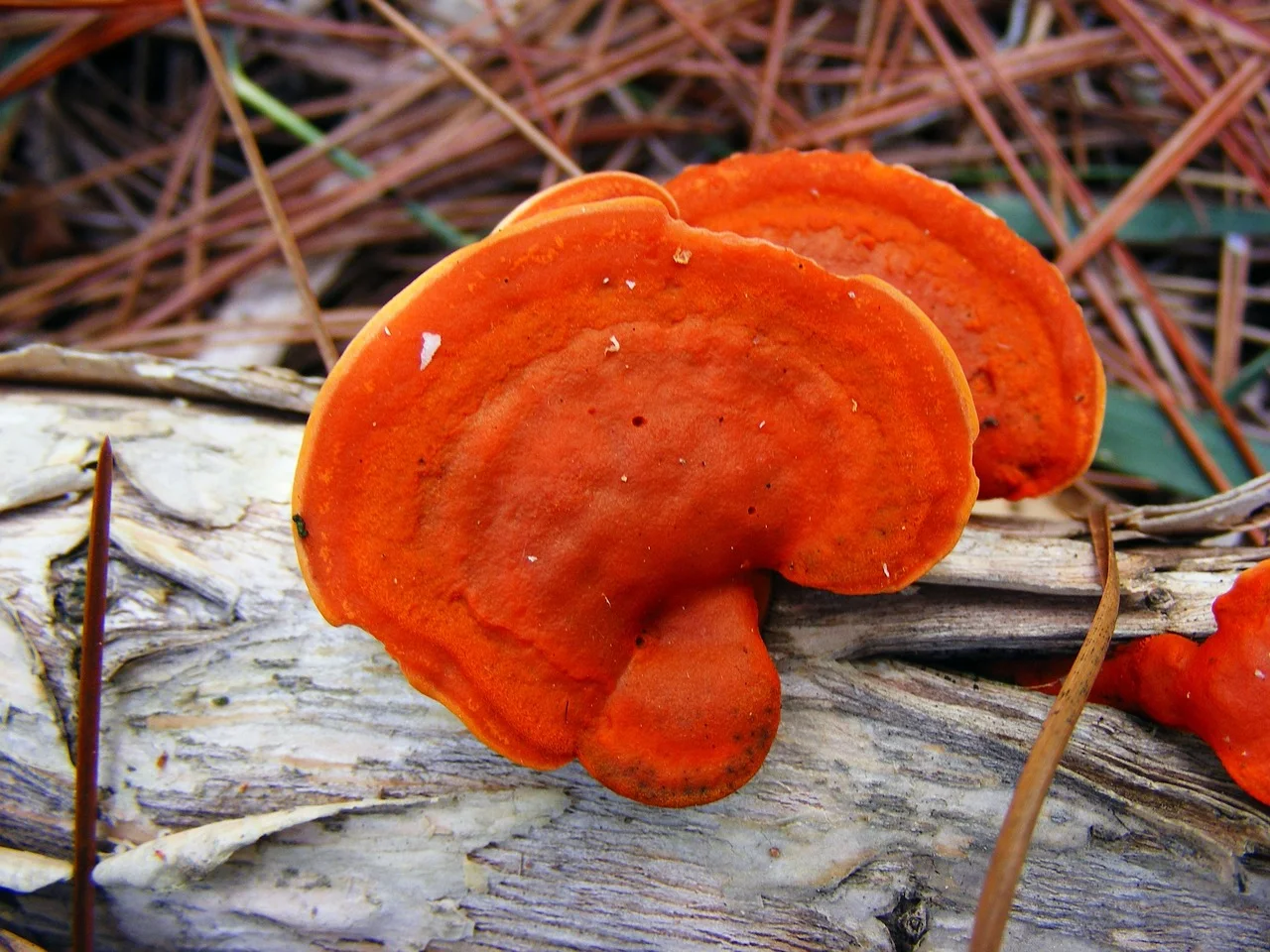
Inedible but non-toxic and easy to identify. Its bright red pigments are used for natural dyeing of fabrics and textiles, producing vibrant red and orange palettes.

Blood Red Bracket real sample

Hairy Curtain Crust

Stereum sp.

Colour palette for Stereum sp.
Deadly iconDeadly
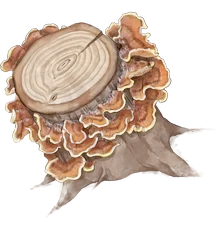
Hairy Curtain Crust illustration

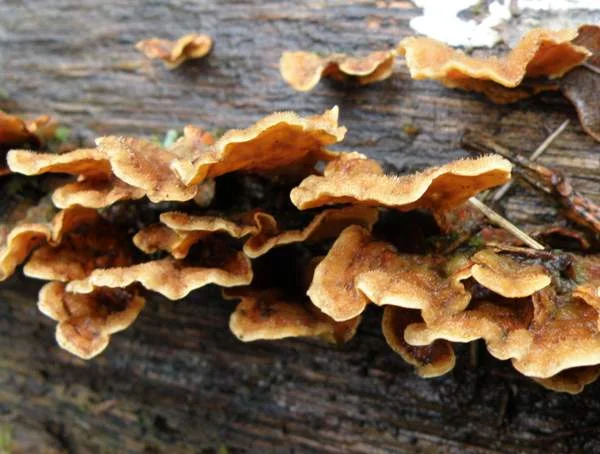
A vigorous fungus that quickly colonises dead wood in Hogsback. Often appears in large clusters with attractive orange hues. Tough, leathery, and fibrous with no culinary significance.

Hairy Curtain Crust real sample

Puffball Mushrooms

Lycoperdon sp.

Colour palette for Lycoperdon sp.
Edible iconEdibleDeadly iconDeadly
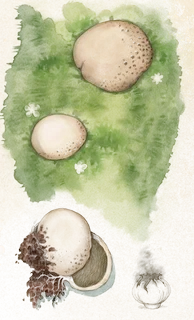
Puffball illustration

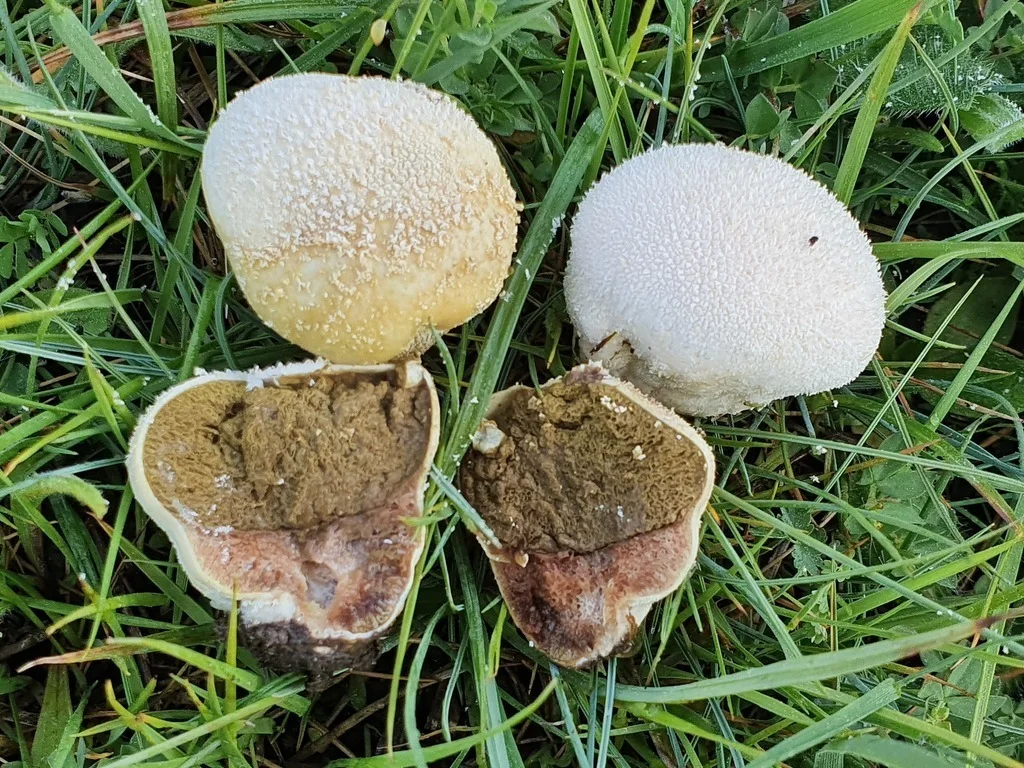
Three common puffball mushrooms occur in Hogsback: one poisonous and two edible. Pigskin poison puff has a dark central spore mass and has caused fatal poisonings. Gem-studded puffball and common puffball are edible only when flesh is white and firm.

Puffball real sample